
SDG Indicators: 1.2.1, 1.2.2
Combating Obesity amongst kids and Bringing down BMI

Introduction:
Kelab Duta Rimba Kuala Lumpur @ Kuala Lumpur Jungle Ambassador Club is a Non-Governmental Organization which established and registered with ROS on 5th November 2014 and a member of DBKL Local Agenda 21 (ROL Sungai Bunus) since 9th October 2016.
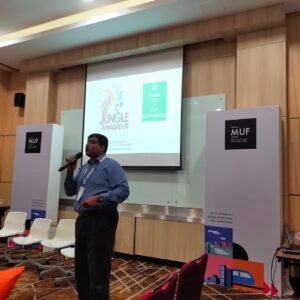
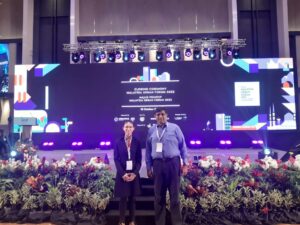
Obesity among school going children is in dire need of attention. The session will to share the outcome of the finding based on data from Program Sihat Rimba 2022 that was organized by us to the floor. We will also use this platform to recommend to the national review committee to emphasize BMI on school kids aged 10-17 which is not been included in the national review committee.
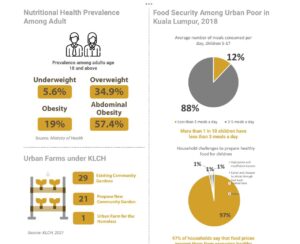
According to DOSM data for kids aged above 5 and below 18 is not available. Based on Sihat Rimba 2022 data it will be used to fill in the data gap for that age group. Also to emphasize students aged 10-17 as an important timeline of the kid's life to understand and practice a healthy lifestyle and healthy eating habit.
We have 5 million students within the school going age that can be trained to become and lead others to become healthy people in the future. As everyone knows that a healthy person can perform very well within their life. Healthy People Healthy World.
The focus was on SDG 2: No Hunger and SDG 3: Health & Wellness. Specifically SDG2.2 states to End all forms of malnutrition by 2030. And 2.4 is To ensure sustainable food production, making it affordable for low-income families.
Where as SDG3.8 is to Achieve universal health coverage including financial risk protection, access to quality essential healthcare services and access to safe, effective, quality and affordable essential medicines and vaccines for all.
These three indicators are the driving force behind this presentation and in due course will show how the data we have in Malaysia, through the National Department of Statistics does not cover the age group of 7 to 17 years of age which is known as the Prevention age group.
The Gap in the health data is indicative of efforts to promote more programmes that target health and wellness as well as leading an active lifestyle in school. The event is directed towards school students, their parents as well as to a certain extent the school administration and canteens that are preparing food for the school kids.
The effects of overweight and obesity reflect poor health from childhood such as hypertension and metabolic disorder leading to weak school attendance and lower self-esteem, insecurity that leads them to bully or be bullied. This then leads to health issues in adulthood such as higher risk of obesity and cardiovascular disease and many other contributor.
Brief on the issue:
As stated briefly on the issue concerning Gaps in Health Data provided within the context of SDG’s, Jungle Ambassador NGO and a group of teachers have taken it upon themselves to conduct a competition in order to gather data from school going children across Malaysia.
The competition namely dubbed ‘Pertandingan Sihat Rimba’ was conducted between the months of February 2022 to October 2022. The objective was to track BMI of each student participant and monitor their food intake. A series of online engagements were conducted as well to spread awareness and encourage healthy eating habits. This competition was one of a solution to the growing obesity among children.
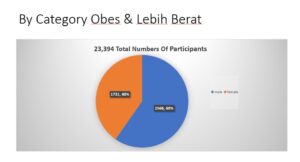
Children of the age 10-17 is most suitable to be exposed to healthy and nutritious meals in order to turn it into a habit. From the data collected by Jungle Ambassador in 2022, Selangor has the highest number of obese children out of 23,000 students from all around Malaysia.
Problem Statement:
There is no where that explicitly mentions in the SDGs indicators ‘prevention’, despite it being a fundamental aspect to control and mediate overspill of obesity among 7-17 year olds that will have extreme adverse effects on future health problems.
Recommendation:
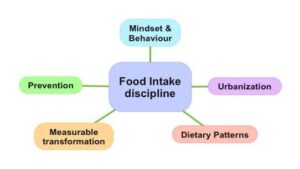
Thus it is pertinent to make use of this data to be included within the context of reporting on state level, as urban sets and rural. Nevertheless the competition and data be recommended to be expanded upon such as tracking types of food intake by students in schools, types of food available in school canteens, as well as drinks and the types of drinks consumed.
These data sets can then be used as launchpad to indicate mindset and behavior, dietary patterns, and ultimately measure transformation to achieve prevention of obese children in the future.
SDG indicator 1.1.1 is one of the indicators used to measure progress towards achieving Sustainable Development Goal 1, which aims to end poverty in all its forms and dimensions. The specific indicator is defined as "the proportion of the population living below the international poverty line, by sex, age, employment status and geographic location (urban/rural)."
The international poverty line is currently set at $1.90 per day, which is the minimum amount of income needed to meet basic needs such as food, shelter, and clothing. The indicator measures the proportion of the population that is living below this poverty line, broken down by different demographic and geographic factors.
Encik Ganesan S. Sittrambaram
Kelab Duta Rimba Malaysia
18 Dec 2022